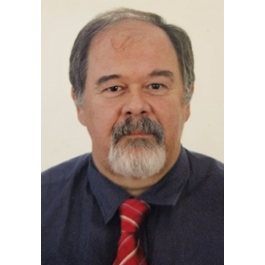
Prof. Petros Gikas (h-index 36)) is a full Professor and the Dean of the School of Chemical and Environmental Engineering, at the Technical University of Crete, and Director of the “Design of Environmental Processes Laboratory” (www.deplab.tuc.gr). He is specifically active in the design of novel wastewater treatment processes with emphasis in low cost – low energy treatment processes and on water reclamation and reuse applications. He is also working on energy recovery from biosolids and municipal solid waste, utilizing thermal or biological processes. He is also engaged in research for water reclamation and reuse and on developing algorithms for integrated water recourses management (with emphasis on water reuse). He has published more than 100 scientific papers and has more than 250 scientific conference presentations, and about 6000 citations. He has edited more than 15 Special Issues, as Leading Guest Editor, on Environmental Engineering topics. Since 2010, he is Editor of the Journal of Environmental Management (Elsevier). He has initiated academic collaborations with a large number of international universities and has provided over 40 lectures as invited speaker. Prof Gikas, has coordinated a number of industrial and academic projects. Since 2022, he organizes and chairs, on an annual base, the “International Conference on Chemical and Environmental Engineering” (SUSTENG) (www.susteng.tuc.gr). He has been classified as the World’s Top 2% Scientists 2018-2025.
Τίτλος Παρουσίασης: Σχεδιασμός Εγκαταστάσεων Επεξεργασίας Λυμάτων υπό το Πρίσμα της Ευρωπαϊκής Οδηγίας 2024/3019: Η Παράμετρος της Ενέργειας
Περίληψη
Municipal wastewater contains over three times the energy required for complete treatment, using conventional treatment processes. Despite the above, large quantities of energy are used for wastewater treatment. Thus, it is wise to design such a wastewater treatment plant, capable to operate with the chemical energy restrained within wastewater.
The recent 2024/3019 EU Directive “Concerning Urban Wastewater Treatment”, among others, enforces that all wastewater treatment facilities serving above 10,000 PE should achieve complete energy neutrality by 2045, with intermediate milestones enforcing energy production equivalent to: 20%, 40% and 70% of energy utilization, by 2030, 2035 and 2040, respectively. Obviously, wastewater treatment plants should undergo fundamental changes to achieve the above targets.
Novel processes may extract larger fractions of the chemical energy bound in the organic matter of wastewater; and if combined with energy sustainable wastewater treatment processes may lead into an energy self-sustainable wastewater treatment plant.
The “Design of Environmental Processes Laboratory” (www.deplab.tuc.gr) has designed and constructed a large scale demo plant for energy production from biosolids, using a novel process for low moisture-high energy biosolids production, combined with biosolids gasification. The system consists of microsieve ® (for separating suspended solids from raw municipal wastewater in the form of highly concentrated biosolids), a drier and a downdraft gasifier for the gasification of the biosolids. The syngas produced is directed into a cogeneration engine, producing thermal and electric energy. The above, if combined with novel downstream process without forced aeration, can drive to an energy self-sustainable wastewater treatment process.